

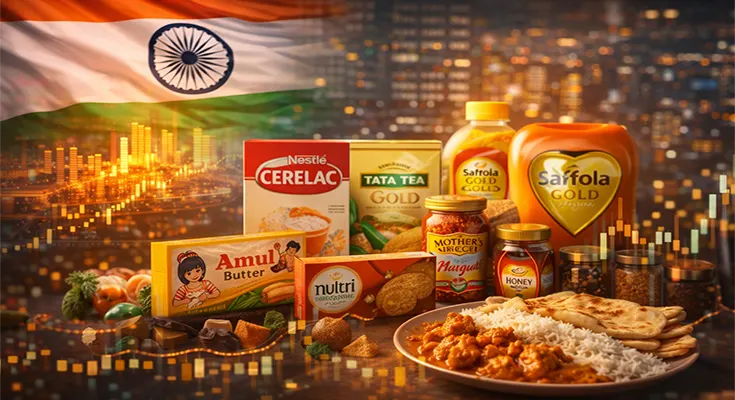
The most enduring investment lesson that India’s equity market offers to the patient, research-oriented participant is that the businesses which create the most wealth over decades are rarely those that generate the most excitement at any particular moment — they are those whose products are embedded so deeply in the daily rituals and emotional associations of Indian households that competitive displacement is not merely difficult but genuinely incomprehensible to the consumers who have grown up consuming them. Among the category of FMCG stocks that represents this phenomenon in its most concentrated form, few companies illustrate it more compellingly than Nestle India, whose food and nutrition brands — Maggi, Kit Kat, Munch, Milkmaid, Nangrow, and the growing health science portfolio that the company has invested in building for India’s aspirational health-conscious consumer — have achieved the kind of category leadership and household penetration that translates, year after year, into the reliable earnings compounding that makes the Nestle India share price one of the most consistently rewarding equity journeys in the domestic consumer sector. The company’s story in India — one of the rare instances in the domestic market where a single brand crisis, the Maggi noodle withdrawal of 2015, could have permanently damaged the franchise but instead demonstrated the extraordinary resilience of genuine consumer loyalty — is the most instructive case study available in the entire domestic FMCG universe of what it means for a brand to be truly embedded in the cultural fabric of a nation’s food habits.
The Maggi Resilience Story: What a Brand Crisis Reveals About True Consumer Loyalty
The enforced withdrawal of Maggi noodles from the Indian market in 2015, following regulatory safety concerns that generated intense media coverage and significant institutional investor anxiety about the permanent loss of the company’s dominant position in the instant noodles category, represents the most rigorous stress test that any consumer brand in India’s recent corporate history has been subjected to. The brand was withdrawn, the product was absent from shelves for approximately five months, competitor brands scrambled to capture the evacuated market space with aggressive promotional spending and distribution expansion, and analysts wrote extensively about the structural loss of consumer preference that prolonged absence inevitably produces. What actually happened when Maggi returned to market was one of the most instructive demonstrations of genuine brand equity available in the entire history of Indian consumer marketing: consumers returned to the brand with remarkable speed and completeness, rebuilding its market share at a pace that confounded even the most optimistic pre-return forecasts. The episode revealed that Maggi had achieved something that mere market share leadership cannot capture — it had become a culturally embedded part of the Indian food experience, associated with memories, convenience, and emotional comfort that competitive brands, for all their shelf presence during the withdrawal period, had been entirely unable to replicate. For equity investors, this resilience confirmed something that the best consumer brand investors had long understood: the most powerful FMCG investments are those in companies whose brands have transcended functional product categories to become emotional household fixtures.
India’s Nutrition and Health Opportunity: Nestle’s Strategic Growth Frontier
The most compelling dimension of Nestle India’s forward investment case is not the continued strength of its existing mass-market brands — impressive and durable as that strength is — but the strategic expansion into nutritional and health science products that addresses the aspirational wellness spending of India’s growing and progressively more health-conscious middle class. India’s demographic profile creates a distinctive nutrition market: an enormous infant and toddler population whose parents are increasingly willing to invest in premium nutrition products for early childhood development; a large and growing adolescent segment whose sports and fitness activity drives demand for protein supplementation and energy nutrition; a rapidly ageing middle-aged urban demographic that is becoming acutely aware of the dietary adjustments that preventive health management requires; and an elderly population whose nutritional vulnerability creates demand for medical nutrition products that were previously accessible only through the healthcare system rather than through retail channels. Nestle India’s existing nutritional portfolio — anchored by infant nutrition products and extending into medical nutrition and health science offerings — is the natural platform for building the premium nutrition franchise that this expanding and under-served demand represents. The company’s ability to leverage its existing distribution relationships, its institutional credibility with healthcare professionals, and its research and development heritage in nutritional science to build this portfolio creates a growth pathway that is structurally independent of the mass-market food cycles that govern Maggi and confectionery revenues, providing a portfolio diversification that improves both the growth trajectory and the earnings quality of the business over time.
Premiumisation: The Volume-and-Value Growth Engine Driving FMCG Returns
The most powerful long-run revenue growth dynamic available to consumer goods companies serving India’s expanding middle class is not volume growth alone — it is premiumisation, the progressive shift of the consumer’s spending within each category from lower-priced, functional variants toward higher-priced products that deliver additional quality, taste, convenience, or emotional satisfaction benefits that justify the premium. This premiumisation dynamic is particularly powerful in the food and beverage categories where Nestle India’s portfolio is concentrated, because food is among the consumption categories where Indians are most willing to upgrade spending as incomes rise — the emotional and social significance of the food experience, combined with the growing awareness of health and quality differentials between product tiers, creates a willingness to pay premiums that many other consumer categories do not elicit with equal consistency. In chocolate and confectionery, the shift from lower-priced sugar confectionery toward premium chocolate products represents a value-add opportunity whose ceiling — measured by the per-capita chocolate consumption that India’s income levels will eventually support — remains far above current consumption levels, providing decades of premiumisation potential even before accounting for income growth. In culinary and food products, the expansion of premium pasta, seasoning, and meal kit variants addresses the aspirational cooking experience of urban households whose rising incomes and evolving food culture are creating demand for internationally influenced product offerings that domestic mass-market brands have been slow to develop.
Pricing Power and Margin Architecture: The Financial Foundation of FMCG Durability
The financial resilience of Nestle India’s earnings across economic cycles is most directly explained by the pricing power that its most entrenched brands possess — the demonstrated ability to implement price increases that recover input cost inflation without experiencing the volume loss that would indicate consumer resistance or competitive vulnerability. The pricing power of a consumer brand is not a static characteristic that can be assumed from current market leadership — it must be regularly tested and validated through the actual implementation of price increases in live market conditions, and the outcome of those tests provides the most reliable real-time assessment of brand equity strength available to the equity analyst. Nestle India’s track record across multiple commodity inflation cycles — each of which required meaningful price increases across multiple product categories — has consistently demonstrated the company’s ability to implement and sustain those increases without proportional volume deterioration in its core brands. This pricing power creates a margin architecture that is structurally superior to companies whose brands lack equivalent consumer loyalty, because it means that each rupee of commodity cost inflation is ultimately recoverable through pricing rather than permanently absorbed as a structural margin reduction. The gross margin trajectory that results from this architecture — declining temporarily during acute commodity inflation phases and recovering once prices are implemented and input costs moderate — provides the investment signal that identifies the most attractive FMCG entry points: the moments of apparent margin compression that, for the genuinely high-quality brands, represent temporary rather than permanent earnings impairment.
Rural Market Expansion: The Next Billion Consumers of India’s Premium Brands
The rural market represents the largest single growth opportunity available to India’s established FMCG companies — a vast and progressively more accessible consumer base whose income growth, digital connectivity, and exposure to branded product consumption through urbanising family members and media penetration is creating aspiration and purchasing power for branded products at a pace that is beginning to rival the urban market’s historical contribution to revenue growth. For Nestle India, the rural opportunity is particularly significant because the company’s urban and semi-urban market penetration, while strong, provides a well-established base from which rural growth can be additive rather than substitutive — every new rural household that adopts Maggi noodles, Munch chocolate, or Milkmaid condensed milk represents incremental volume that does not cannibalise the existing urban consumer base. The strategic challenge for Nestle India in rural markets is packaging and pricing: many of the rural growth categories require smaller pack sizes and lower per-unit prices that allow trial and adoption at the income levels prevalent in rural markets, and the margin arithmetic of serving rural markets profitably requires the operational scale and distribution efficiency that only companies with Nestle India’s infrastructure depth can achieve. The company’s progressive investment in rural distribution capability — extending the direct dealer reach that has historically been concentrated in urban markets into the tier-three and tier-four towns and the large villages that represent the frontier of branded consumption growth — is the operational foundation of the rural revenue opportunity that will drive the company’s next phase of volume growth.
Building a Premium FMCG Portfolio: Lessons From India’s Most Trusted Brands
The principles that make Nestle India the compelling long-run investment that its share price history confirms are not specific to the food and nutrition category — they are universal investment principles whose application to any consumer goods business provides the analytical framework for identifying the most rewarding FMCG investments across the full breadth of India’s consumer sector. The foundational principle is consumer loyalty so deep that it survives competitive pressure, crisis, and prolonged absence from the shelf without material erosion — a quality that cannot be manufactured through marketing expenditure alone but is built through decades of consistent product quality delivery that earns the consumer’s trust at the most fundamental emotional level. The second principle is the connection between premiumisation opportunity and income growth: the consumer goods companies that will generate the most rewarding long-run equity returns are those positioned in categories where rising incomes translate into rising spending per consumer rather than merely more consumers at the same spending level. The third principle is operational excellence: the ability to manage raw material cost cycles, distribution network economics, and product innovation pipelines with sufficient efficiency to maintain margins above the cost of capital across the full range of the commodity and economic cycles that any multi-decade investment horizon will encompass. Together, these principles define the investment in India’s finest consumer brands not merely as a financial decision but as a participation in the most fundamental and most enduring aspect of the country’s economic story — the progressive improvement in the quality and richness of the daily lives of its people.
India’s consumer goods sector is the equity market’s most honest reflection of the nation’s most powerful economic force: the determination of its people to consume better, live better, and provide better for their families as their incomes grow. The companies that have built the brands trusted by those people — whose products are consumed at breakfast tables, packed in children’s lunch boxes, and offered to guests with genuine cultural significance — are the businesses whose equity journeys most faithfully track the arc of India’s prosperity. For the investor patient enough to hold them through every cycle and conviction enough to add during every correction, these are the investments that compound the most reliably across the full span of a lifetime of participation in the most dynamic consumer market the world has ever seen.